Monday, August 1, 2011

Have You Fallen Prey to the Seven Signs of a Bad Boss?

It's tough for employees to be engaged and focused on attaining key organizational and professional goals when they are under the influence of an ineffective manager or supervisor. 

And, the quickest way to ensure high labor turnover within your department as soon as the job market improves is to demonstrate the characteristics of a BAD BOSS.

  1. Bad Bosses Have No Clear Goals. If your team has no clue of the goals or expectations they should be working towards, this may be a weak area for you. In such cases, that there are either no goals at all; the goals are unrealistic; or they are unclear to the team. This leads your team to believe that either their boss doesn’t know what they are doing, doesn’t care, or doesn’t want them to be in the loop.
  2. Bad Bosses Deliver Poor or No Communication. These are the silent types, who revel in their team not knowing what they are thinking. Bad Bosses don’t feel it necessary to communicate how the company is doing, nor how employees are performing in their jobs. They just don’t communicate, and rarely show any emotion – good or bad.
  3. Bad Bosses Hold No One Accountable. When there is no communication of team standards or goals, Bad Bosses really can’t hold anyone accountable for excellence or even mediocre job performance. Bad Bosses are apt turn a blind eye, allowing rampant compromise throughout the workplace – and in spite of their lack of accountability, they are not approachable and some employees even fear them.
  4. Bad Bosses Often Blames Others. When things don’t go as they planned or expected, Bad Bosses are quick to point fingers at everyone except themselves – especially when their team doesn’t perform up to par. While self-accountability is out of the question, Bad Bosses find it easy to blame inefficient work systems, processes, and staff members (all within their sphere of control) for their inability to meet company-wide goals and performance standards.
  5. Bad Bosses Have No Strategy for Improvement or Team Success. Stubbornly believing that strategizing is a waste of time, they just don’t bother with it. Bad Bosses have a false belief that they are doing fine as is; and because often the powers that be (senior leaders and board members) don’t hold them accountable for positive change, things remain in a constant state of confusion for both customers and employees.
  6. Bad Bosses Never Delegate. To mask their fear of employee empowerment, Bad Bosses fail to properly train and delegate challenging tasks to their team members. They are cynical when it comes to their team, and don’t feel that anyone has the intellect or capacity to perform their job satisfactorily. Therefore, the team remains stagnant and virtually paralyzed in the absence of leadership.
  7. Bad Bosses Don’t Mentor Others. To them training, development of staff, and mentoring is also a waste of time. They often say, “No one ever mentored or developed me and I turned out alright.” Bad Bosses have no concept of how to synergistically collaborate with their team to help them grow and excel in their jobs. Unfortunately, Bad Bosses practice “tough love” when it comes to on-the-job training.
Now take a minute and assess your current workplace. How many of these poor leadership behaviors do you or your leaders regularly exhibit? When you are treated like this, how does it make you feel?
If this information has helped you surfaced some of your blind spots, now is a good time to make a change in order to increase your effectiveness as a leader. And for more information on how to enhance your effectiveness as a leader, check out our popular book "The Leadership Book of Numbers, Volume 1"

Friday, July 1, 2011

Looking for Fresh, Creative Ways to Drive Service Excellence?

Performance Solutions by Design is one of the few premier consulting firms that not only offer keynote presentations, webinars, online workshops, and training for leaders and line staff -- we also offer a host of comprehensive Service Excellence Tools and Resources.

Click the link http://tinyurl.com/6la6g7fto check out our latest library of Service Excellence Tools and Resources, and learn how you can take advantage of deep discounts when purchasing the package we are featuring this month.  You are guaranteed to find something that you can use...

Friday, June 10, 2011

Do You Possess the Six C's of Leadership?

There are Six C's of Leadership that anyone who has influence and power over a team of people should possess.

Having the ability to master these six characteristics is the embodiment of a highly effective and successful leader.

  1. COMPETENCEmore than knowing "how to do" something, but also displayed in the level of confidence, finesse and effectiveness with which it is done.
  2. COMPASSIONthe balance of kindness and empathy.
  3. COURAGEdoing what is right, even when it is unpopular.
  4. CHARISMAa positive energy and an enthusiasm that inspires others to change.
  5. COMMITMENTbest demonstrated in the level of dedication and allegiance you have toward your team.
  6. COMMUNICATIONthe ability to share information in a clear and concise manner so that everyone understands.
Which of these Six C's of Leadership are your strengths? Which are oportunities for improvement? What will be your plan for personal change?

In the final analysis, becoming a person of influence that others want to follow begins with YOU.  Remember, exceptional leaders are competent, committed to the cause, courageous, great communicators, charismatic, and possess a great deal of compassion for others.

To read more on the Six C's of Leadership and other short tips for leaders on the go, check out our latest book, The Leadership Book of Numbers, Volume 1.  We guarantee it will help you grow your business, enhance your professional life, and lead others more effectively. 

Sunday, May 15, 2011

Service Excellence is Process Driven

Many leaders falsely assume that to create and sustain a culture of service excellence all you have to do is put employees through customer service training every couple of years.  But this is a common leadership and business fallacy.

Often, customer service training is not enough because: it is brief (typically 2-3 hours in duration); not tailored to the culture of the organization; does not include link the organization’s service philosophy (its vision, mission, and values); and often does not have not documented processes or standards to back it up.

More specifically, when there are no processes to reinforce a culture of service excellence, IT IS NOT SUSTAINABLE. Therefore, here are the ten key processes you must have in place to drive excellence. If they are not interwoven into your organization, your customer service training will be an expense that is something that is “nice to do,” but there will be no sustainable return on investment or guarantee of enhanced customer satisfaction and loyalty after employees have attended.

Outlined below are the 10 Key Processes for Driving Excellence. If you answer “no” to any of these questions, consider them building blocks to strengthening and sustaining your organization’s service culture.

1. New Hire Selection – does your organization have a structured interview and hiring process that guarantees that every employee selected to work within the organization is aligned with the vision, mission, core values, and key business priorities?

2. New Hire Orientation / On-Boarding – is your new employee orientation program immediate (starting on the first day of a employees’ career with your company) and is it used as an opportunity to educate them on the organization’s key priorities, where it is going, what is expected of new employees in their job, and what they can expect from the organization?

3. Department and Job Specific Training – do new employees receive thorough training for their job, as well as information on how the department operates; also, do veteran employees receive recurrent training to ensure their job skills stay sharp and they do not become complacent in their work?

4. Internal Communication – does your organization encourage regular Department Meetings and schedule semi-annual All Employee General Sessions, to ensure everyone stays up-to-date on what’s going on in the company, what is expected of them, and how we're doing at meeting customer needs and expectations?

5. Reward and Recognition – are there multiple ways for employees to receive recognition for a job well done by senior leaders, their immediate managers, peers, and customers?

6. Customer Problem Resolution – are employees regularly taught the basic problem resolution process (LEAP - Listen, Empathize, Ask, and Produce), so that they are comfortable and competent in handling customer issues as they arise?

7. Employee Empowerment – are your employees regularly made aware of the alternative that they are empowered to offer customers when a problem arises, before they need to get a manager involved?

8. Verbiage – is there a standard language, do’s and don’ts that are used when interacting with customers to create a warm, friendly and inviting experience?

9. Communication Etiquette – are there written telephone, voicemail, and email standards that everyone throughout the organization uses to ensure consistency in communicating with external customers and each other?

10. Employee Accountability – are employees and leaders aware of the consequences of non-compliance with established company standards (i.e., retraining, coaching and counseling, job reassignment, progressive discipline), and is accountability for driving excellence reinforced at every level from the boardroom to the storeroom?

Bottom-line, while our 10 key processes are not all inclusive, hopefully it will fill in some of the gaps in your roadmap to achieving and sustaining a culture of service excellence.

If you are interested in obtaining specific details for refining some of the processes we have cited in this article, feel free to check out our website at http://www.psbydesign.com/.

Sunday, March 13, 2011

The Power of a Service Excellence Sustainability Plan

After attending our one-day session “The Leadership Toolkit for Creating and Sustaining a Culture of Service Excellence” most participants leave with a renewed sense of self-motivation and accountability for driving excellence.

However, without the proper tools and resources to elevate customer service to the next level many leaders allow their work environments to slowly revert back into the same old ineffective, non-customer centric mode.

Creating a Service Excellence Sustainability Plan not only helps leaders identify gaps that may be standing in the way of their team performing at optimal levels and providing exceptional customer service, but it also helps them put in proper perspective how they will overcome barriers to achieving and sustaining a high level of excellence.

A sound Service Excellence Sustainability Plan will assess whether or not the leader needs to refine the team’s: (1) Telephone Etiquette Standards to ensure the customer’s first impression when calling in is a positive one; (2) Grooming and Appearance Standards so that the first visual impression that a customer perceives is always a positive representation of the company; (3) Communication Processes so there is total alignment within the team and across departments; (4) Problem Resolution and Empowerment Processes so that if a customer experiences a problem it is dealt with effectively, with a sense of urgency that retains customer loyalty; and (5) Recognition Systems that reward team members who consistently go above and beyond to provide an exceptional experience for every customer.

Now you may be thinking to yourself, “Is that it?” Of course not, but it’s a great start. These are the building block of proper customer service and when consistently done can lead (over time) to a 20-30% increase in customer satisfaction and profit.  Remember, creating a culture of service excellence is a journey, not a destination – and soon after closing these simple customer service gaps the highly effective leader will quickly move on to overcoming more significant barriers.

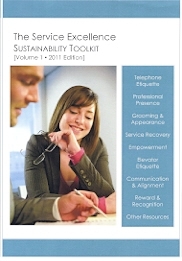
If you have established that simple service basics like telephone etiquette, problem resolution and empowerment, grooming and appearance, and internal communications need to be addressed within your team – our Service Excellence Sustainability Toolkit is a comprehensive resource guide that will help you close these gaps in a matter of days, not months or years.

Click the link   http://tinyurl.com/49fqwxm  to learn more about the Service Excellence Sustainability Toolkit and how you can obtain a copy. We wish you the best in your endeavor to drive excellence!

Tuesday, February 1, 2011

It's the Little Things

Yesterday, I was headed into downtown Atlanta for a client meeting when realized that I immediately needed gasoline – my fuel indicator light was blinking incessantly.

When I stopped at the closest Shell Gas Station to fill up, I noticed that the gas I needed was running at almost $3.50 per gallon. Wow, I thought to myself – that’s pretty high!

Then all of a sudden, out of nowhere, a kind female employee warmly greeted me and said “Good morning!  Its customer appreciation day, do you mind if I clean your car windshield?” Yes, I pleasantly replied as she approached my car.


I found myself quickly engaged in a friendly conversation with her about the beautiful weather we were experiencing in the middle of the winter, and before I knew it I was finished pumping my gas, she was extending to me a fond farewell, and on her way to attend the next customer.

To you this story may seem lackluster. However, what makes this brief encounter so memorable for me is the small act of kindness on behalf of the employee that caught me off guard and made me completely forget about the extra money I was spending for gasoline at her station.

Now, I’m sure this customer appreciation day activity was a probably a planned company initiative, but the genuine attitude that the employee extended made a tremendous difference. She had the right attitude, and unknowingly started me off to a great day.

The lesson learned is that too often frontline employees and leaders tend to forget (whether working in a bank, grocery store, dry cleaner, gas station or any other customer oriented business) that its the little things -- like the way you greet, approach or service a customer that makes or breaks their perception of the organization.

So take some time today to extend a small act of kindness to make someone’s day, whether they are an internal or external customer – because in the final analysis, it’s the little things that make a big difference!

Thursday, January 6, 2011

8 Reasons to Focus on Service Excellence in the New Year

Creating a culture of Service Excellence is a journey, not a destination; and as we approach the New Year it’s a great time to reflect on what you actually accomplished and wish you could have accomplished in the past year.

If one of your organizational goals is to maintain a competitive edge by enhancing the customer experience, then focusing on Service Excellence could provide  a comprehensive approach that could result in service, product, and profit dominance.


Focusing on Service Excellence will positively impact:

  1. Organizational Alignment, by forcing you to refine your organization’s definition of exceptional service. Defining service excellence starts with clarifying what exceptional customer service should look, sound, and feel like every time a customer interacts with your staff or uses your products and services.
  2. Employee Engagement, by forcing you to involve employees in the planning of work that affects them. Creating a culture of service excellence is something that you do with employees, not to them. Their buy-in, commitment, and active involvement all contribute to sustaining the culture for the long-term.
  3. Leadership Effectiveness, by forcing you to hold leaders accountable for driving excellence. No longer will leaders be allowed compromise in the quality and level of service that their staff provides. Their performance will be directly linked to sustained employee engagement, customer loyalty, quality management, and profitability.
  4. Overall Communication, by forcing you to increase interaction with employees through regular updates on company issues that impact their work and in soliciting their feedback on ways to improve products and services.
  5. Operational Excellence, by forcing you to assess service and product quality gaps, then searching for and implementing simplistic, cost-effective ways to improve without compromising the customer experience.
  6. Service Recovery, by forcing you to identify ways to effectively resolve the most common customer issues through process improvement and teaching employees how to handle customer issues with a high level of professionalism and finesse.
  7. Customer Loyalty, by forcing you to create a customer-centered work environment that enhances all key touch points that make up the customer experience. This includes improving the way we greet and interact with customers; the way we answer the telephone; the manner in which we improve processes that directly impact the customer; and our process for resolving any issues that may arise and diminish the customer experience.
  8. Revenue & Profitability, by forcing you to focus on a more comprehensive approach to customer service by identifying ways to create an environment that fosters service, performance, and operational excellence. Ultimately, you create a delightful customer experience that makes them more apt to recommend your products and services, continue to return, and be willing to spend more.

While these eight reasons to focus on Service Excellence may not be all inclusive, my hope is that it has ignited creative juices as you think about how you will approach creating and sustaining a culture of Service Excellence in the New Year.


Wednesday, December 1, 2010

My Pleasure! Fostering a Culture of Gratitude

Many years ago when I worked for Ritz-Carlton Hotels, we had a signature phrase that every employee from the CEO to the Dishwasher used, it was “My Pleasure.” This phrase was genuinely used whether you were interacting with a guest, customer, or fellow employee; it was our unique way of saying “thank you”, we value your presence and are delighted to serve you.

As a Ritz-Carlton employee we were constantly reminded to use phrases like “thank you”, “I’ll be happy to”, “Certainly”, and “My Pleasure” – and words like “ok”, “yeah”, “gotcha”, and “no problem” were never used in the work environment.

Being ladies and gentlemen of The Ritz-Carlton organization, this was our way of fostering a culture of gratitude, while creating a warm, refined, yet relaxed ambience. And, we were constantly reminded by leadership that every employee is important, and should be treated with the highest level of dignity and respect. This feeling or culture permeated throughout the work environment and significantly enhanced employee engagement.

Assessing Your Organization’s Culture
Now take a moment to reflect on your team and work environment. What culture is being fostered? When your employees interact with customers or each other -- are they gracious, courteous, patient, and respectful? Or, are they impatient, abrupt, and often rude for no particular reason? Like it or not, often employees are a mirror image of their leader. Whatever behaviors the leader consistently demonstrates will be acted out by their employees with customers and each other.

Initial Steps in Creating the Culture
If you desire to create a culture of gratitude, you start by: (1) Treating every individual you encounter (whether they are a paying customer, employee, or peer) with the highest level of dignity and respect; (2) Never let your ego or professionalism come into question, even when dealing with difficult situations; and (3) Consistently use the type of refined vocabulary, words, and phrases that you expect your employees to use.

Now I don’t expect you to adopt Ritz-Carlton verbiage standards, but what I would highly recommend is that you quietly reflect on your work environment, determine appropriate verbiage, start using it, and integrate it into employee training so that it becomes second nature for your team.

In closing, I am not advocating that all you have to do is change the verbiage used within your organization to change the culture, but believe me it is a good start that will steadily move you in the right direction.

Tuesday, November 9, 2010

Celebrating 7 Years of Success

It's hard to believe that Vivian and I launched Performance Solutions by Design  seven years ago. The time has passed so quickly, and the amount of support from former Ritz-Carlton colleagues, new clients, long-time friends,  family members, and fellow compatriots along the way has been much appreciated and overwhelming. 

One thing is certain, without the support of so many committed friends we wouldn't have achieved so many significant, impressive milestones in such a short amount of time. For instance, in 7 years we've:
  • Published two popular business books
  • Launch our Free E-Learning Program
  • Developed over 60 E-Learning Mini-Workshops
  • Formed long-term alliances with two Prestigious Universities
  • Reached 14,000 viewers on our E-Learning Network
  • Reached 25,000 leaders & employees through our Training Programs
  • Launch Corporate Universities for three renowned corporations
  • Launch a comprehensive Social Media initiative
As we begin strategic planning for 2011 we have many new and exciting initiatives in store.  But most of all THANK YOU to everyone who has supported us along the way.  May you be blessed with prosperity and good health throughout the new year!  -- Warm Regards, Theo & Vivian

Wednesday, October 13, 2010

Building the Next Generation of Leaders

Performance Solutions by Design has a comprehensive library of over 60 FREE e-Learning Workshops that are designed to increase business acumen and leadership effectiveness

Whether you are considered a high potential employee, a mid-manager, or an emerging executive -- we have interesting and dynamic topics that will be of interest to you. 

Click here for details on our FREE E-Learning Workshops

Our seasoned workshop facilitators can also offer most of these topics in an engaging half-day or full-day leadership session at your location. We certainly hope you view and enjoy the learning. And, most of all please share this FREE information with your friends and colleagues.

Friday, September 10, 2010

Have You Read Our Recent E-Newsletter?

Check out our September 2010 E-Newsletter for the latest information on our upcoming workshops, recently published white papers and articles, free e-learning workshops, and much more.  -- just click the link below...
 What's New / What's Next (September 2010)

Tuesday, August 10, 2010

Lessons Learned from Undercover Boss

If you haven’t been watching the reality show Undercover Boss, I definitely recommend you catch at least one episode soon. It airs weekly on CBS, and I’ve accidently caught 2 or 3 episodes over the summer months and they were well worth 60 minutes of my time.

For those not familiar with the show, it features a senior executive (typically the CEO) of a well-known corporation who works undercover in their own firm for a few days to investigate how the company really works and to identify how it can be improved. At the end of each show, the undercover boss resumes his true identity and summons the employees he worked with individually to corporate headquarters. He then reveals his identity and rewards the hardworking employees through promotions and financial rewards.

The reason I believe its worth one viewing (of any episode) by a leader is because it reveals the many blind spots senior leaders sometime have concerning their company and the effectiveness of new initiatives they firmly believe in and put in place system-wide. So, here are a few of my lessons learned:

 
Don’t get too caught up in smelling your own perfume or cologne. Sometimes we get so caught up in the financial outcomes of new initiatives and technology that we forget about or neglect the human element – our employees and customers.

Learn by walking around. Make it a habit to get out to your office at least a few times a year, visit the various departments and facilities, walk around, meet and greet employees, and genuinely ask for their input on how things are going. Most of all be prepared to hear the bad sprinkled in with the good to give you a firsthand impression of what the company culture really is.

Always make a good-faith effort to solicit employee input. Before implementing major changes or initiatives that will significantly impact how work gets done, request employee suggestions and feedback. This will not only prevent you from being caught off guard you when you hear that they are unhappy or dissatisfied with new changes, but also allow you to understand how the changes will impact them personally.

 
What I get most out of watching Undercover Boss is how detached we sometimes are (as leaders) from the day-to-day operations of our organizations, just how detrimental that can be to employee productivity and morale, and the immense sense of pride employees display when we show that we appreciate and value their contribution.

 
If you’ve been following the show (Undercover Boss), I would love to hear your impression of it, and whether or not you too have gained any lessons learned from it. I look forward to hearing from you!

Thursday, July 1, 2010

When You Absolutely HATE Your Job


In my work as a Performance Consultant, Instructional Designer, and a Training Facilitator, I am exposed to all sorts of employees ranging from the extremely enthusiastic and loyal to those who ardently hate their jobs. I often think of what a miserable existence unhappy employees  must lead walking into the corridors of an office day-in and day-out that they absolutely despise.

Feeling compelled to help out, I have devised the three essential steps to take if you absolutely hate your current job.

#1 - Look within to determine why. Take some quiet time and ask yourself what is causing your dislike and displeasure with the job. In speaking with employees who feel this way, typical responses are that their skills and talents weren’t being properly utilized, or they feel overwhelmed with the volume of work they are required to perform each day. Some say that their boss is a total nightmare and difficult to work with, while others just feel the work environment (whether fast-paced or slow-paced) just isn’t a fit for them. Some also respond that ultimately the job significantly infringes on their personal values and/or family life.

#2 - Write down the Pro’s and Con’s of leaving to make a career transition. Before you start drafting your letter of resignation and throwing in the towel, consider the advantages of leaving. Your advantages might include happiness and peace of mind; more time with family; or the potential to make more money doing something that you love and enjoy. In contrast, disadvantages of leaving your current job might include financial instability until you find that new job; less money to meet your family needs; and potentially being unable to sustain the lifestyle you currently enjoy. Of course, if the advantages outweigh the disadvantages then its time to make a move.

#3 - Map out an Action Plan with specific time lines.  If you are committed to leaving in pursuit of a more self-gratifying career, then start networking inside and outside of work and securing professional references; attend as many company-sponsored training workshops as you can; update your resume and definitely refine your interview skills. Most of all, give yourself a timeline by which each of these tasks will be accomplished. Likewise, if you plan to stay put in your current job and stick it out, then start a hobby outside of work that you enjoy or do volunteer work in your community or church; network within the organization, looking for internal opportunities to grow and potentially be promoted within; seek training to enhance your skills; and most of all learn not to take every little thing at work so personal.

Bottom-line, while these three essentials are not be all inclusive, my hope is that it helps get creative juices moving in a more positive direction. If you hate your current job, don’t stay, consistently displaying a negative attitude that totally contaminates the work environment and morale of everyone else. Be proactive and work toward a strategy that will move you in the direction that opens doors to a more fulfilling, purposeful career.

Monday, May 24, 2010

Free E-Learning Workshops

E-Learning when done right can create significant cost savings for your organization in reduced facilitation, travel, and materials expenses. I have been using it as a means to reinforce many of the leadership development workshops I create and facilitate each year, with tremendous success.


If you are looking for effective, brief, e-learning workshops that provide quality content and are designed for high potential and emerging leaders, just click the link I have provided below to check out some of my best practices. -- Warm Regards, Theo

http://my.brainshark.com/Search.aspx?searchtext=theo%20gilbert-jamison

Saturday, May 1, 2010

Lessons Learned While at the Post Office

This week I happened to be in the post office on two separate occasions. Both times I used the post office because their price for shipping the packages I needed to mail was most economical. 

When I entered, the post office was clean, well-lit, well-organized, and the location was convenient to my office. However, in spite of the money I saved in shipping costs, the countless minutes I lost waiting in line to be served made the overall experience a total let down. Just another example of the infamous saying “cheap always costs more.”

During my wait in line, what I observed in the actions and behaviors of the postal workers was consistently poor.
  • No one ever smiled at a customer
  • No one greeted customers with a warm and friendly “good morning or afternoon”
  • At the end of each transaction, no customer was ever “thanked” for doing business with them
  • As a matter of fact, we were treated like transactions, instead of human beings
  • Customers appeared to be an interruption of their work
  • And most disheartening is that there was no “sense of urgency” or value of the customer’s time
 It is no wonder fewer and fewer customers each year use the U.S. Postal Service. What the post office has to offer its customers in convenience, cost-savings, and diversity of products and services, is often lost in the lackluster customer experience. I am not saying that every time I visit the post office it should be a celebration, but it should be a memorable and engaging experience that keeps me coming back because of the delightful people that work there.

So what are the lessons learned? Well for one, if you don’t treat your customers as if they were your most valuable assets – they will stop patronizing your facility and services. A second lesson learned is that the post office is a great place to benchmark if you specialize in getting rid of customers.

Bottom-line, the most important lesson learned is that if you want to ensure customers patronize your products and services for a lifetime then make sure your employees: (1) are warm and friendly; (2) value their customers; (3) have a sense of urgency in serving customers and; (4) are competent and passionate about their work.

Based on my own personal calculations, I suspect that the lifetime value of a post office customer has to be around $10,000 (at a minimum). Seriously, what type of service do you suspect we would receive if every time a customer walked into the post office they were perceived and treated as a valuable, lifetime customer?

Thursday, April 1, 2010

The Mindset to Create a Culture of Excellence

Does your leadership team embody the mindset needed to create and sustain a culture of excellence?

In order to drive and sustain service, performance, and operational excellence a leader must embrace nine key paradigms. While a good majority of leaders believe in the concept of service excellence, only a small minority totally embrace it, act on it, and over time see significant results.

This is an excerpt of Chapter 5 from our popular book, The Leadership Book of Numbers Volume 1. As you read through these key paradigms, I encourage you to assess your behavior and consider which ones you need to improve on. At the end of this article is a link to assess the book and full article.

Highly Effective Leaders…
  1. Are avid students of service excellence, and always striving for perfection in the manner in which service is delivered to the customer. They are never satisfied with mediocre or even good service, and persevere until they are able to consistently deliver the ultimate customer experience.
  2. Find meaning and purpose in their work, and because of their strong commitment to the organization’s vision and mission, they easily inspire others to enthusiastically follow them.
  3. Receive an intrinsic satisfaction from watching employees grow. Highly effective leaders thrive in a work environment that fosters employee empowerment and uncompromising levels of service for both internal and external customers.
  4. Stay focused on the big picture, which is ultimately customer loyalty. The energy of their team should be channeled toward successful achievement of this business objective, which ultimately impacts bottom-line results.
  5. Have high expectations and standards for themselves and their team. Unwilling to compromise company standards of service, they take ownership of their work (good or bad) and desire to work alongside other dedicated employees.
  6. Are highly competitive, they do not enjoy losing or even coming in second place. Being number two is not an option in the minds of leaders consumed with excellence; it is achieved through their desire to be number one.
  7. Know their attitude (good or bad) sets the tone for the team. These leaders are addicted to positive thinking and have no problem confronting negativity head on. Their positive, upbeat demeanor enables them to create great relationships with employees and customers alike.
  8. Are empathetic in their helpful approach with people. Because of their genuine concern for others, highly effective leaders become fully engaged by listening with their ears and heart to find the essence of any customer or employee dissatisfaction. They are supportive of the uniqueness of others and emotionally sensitive.
  9. Have an intense desire to share knowledge with their team. These leaders regularly collect information that is beneficial to the team, thus increasing its performance. They enjoy opportunities to learn more about the business.
Remember -- to drive excellence, productivity, and success within your team or organization, you must select a team of leaders who possess the mindset needed to embrace a culture of excellence. It does not happen by chance.

The Leadership Book of Numbers, Volume 1 
http://psbydesign.com/content/view/130/125/

Saturday, March 6, 2010

Stop Negativity in the Workplace NOW

In these days and times there is absolutely no room for negativity in the workplace. However, time and again I encounter leaders who allow one or two employees to totally contaminate the morale of the entire team with on-going negative comments and slurs. Evidently, what the leader doesn’t realize is that this shows a sign of weakness in their ability to effectively lead their team, and achieve expected business results.

When a leader allows negativity to fester within the work environment there are two key areas of leadership effectiveness that they are lacking in: (1) Employee Accountability; and (2) Confronting Unacceptable Behavior. So here are a few key tips to improve in these two major areas.

When it comes to accountability and confronting unacceptable behavior:
Address the issue immediately.
Discuss the matter in private.
Be very polite.
Allow the employee to respond.
Don’t take their negativity personally.
Explore solutions together.
Reinforce the behavior your want corrected.

As leaders, sometimes we need to be reminded that we are in charge, we control the work environment, and we are accountable for ensuring it is a harmonious environment where people and productivity can thrive.

So, for more details on confronting unacceptable behavior and holding employees accountable in the workplace, below are links to two brief, popular and engaging e-Learning presentations that we have created for your review.

The Five Steps to Employee Accountability (10 minutes)
http://my.brainshark.com/The-Five-Steps-to-Accountability-195335032

Confronting Unacceptable Behavior (11 minutes)
http://my.brainshark.com/Confronting-Unacceptable-Behavior-723727345

We hope you find time this week to review them. And, remember you create the work environment (good or bad). Don’t allow the negativity of a few bad apples to fester and destroy it.

We’d love to hear your perspective on allowing negativity to fester in the workplace. Please share your comments!

Tuesday, February 16, 2010

View Theo's Explanation of The Six Principles...
Ladies and Gentleman, I am experimenting with video as a means to regularly communicate with my faithful BLOG supporters. I am still an amateur so don't be too critical.  But, please do check out this brief video I recently did explaining The Six Principles of Service Excellence.  I would love your input!

Tuesday, February 9, 2010

The Purpose Driven Leader

Leaders of organizations are multi-dimensional.  Some are great at launching and building the business, others are great at sustaining a successful and financially viable business, and some are even adept when it comes to gracefully shutting down a business following a bankruptcy, merger or acquisition.

Regardless of where you fit in the leadership spectrum, the most memorable, endearing leaders are principle-centered, value-centered, others-focused, and driven by a strong sense of purpose. Recently we spent time with a CEO of a prominent health care organization, his actions and behaviors inspired me to define what it means to be a purpose driven leader.

Characteristics of a Purpose Driven Leader

Taking into consideration that at a minimum, all purpose driven leaders are highly competent in their field of work, there are ten key characteristics that set them apart from other leaders.

  1. They are customer and employee focused. Purpose driven leaders understand that it takes engaged employees to create loyal customers.  Therefore, they put tremendous focus on creating an environment that helps all key stakeholders thrive.
  2. They are people and process driven. Purpose driven leaders understand that you lead people, and manage processes; they know that both are vital in creating a culture of service, performance, and operational excellence.
  3. They are principle and value centered. Purpose driven leaders are guided by honesty, integrity, respect for all, passion for what they do, and excellence in everything they do.
  4. They have a strong sense of humility. It’s not about them; it’s about positively moving the organization forward. Purpose driven leaders have no problem putting their egos aside, in spite of their level of power.
  5. They are open-minded, lifelong learners. Purpose driven leaders don’t pretend to know it all; they revel in the fact that there is always more to learn to enhance their effectiveness.
  6. They are revered by their staff. People follow purpose driven leaders not just because of who they are in the chain of command, but also because of what they represent.
  7. They are not afraid to admit failure. If it’s for the greater good, purpose driven leaders are not intimidated by failure, it only motivates them to more readily regroup and continue the good fight in achieving and sustaining organizational success.
  8. They have a compelling vision. Purpose driven leaders regularly explain their vision for the organization with great clarity, inspiring the team to readily contribute to organizational success.
  9. They are happy people. Purpose driven leaders have a positive outlook, and are approachable by all. Even if they’ve had a bad day, just got out of an upsetting board meeting, or just got off of the telephone with a livid customer, they don’t carry bad attitudes on their sleeves.
  10. They never give up. Purpose driven leaders are tenacious, and continually in the pursuit of what is good and right for the organization, its customers, and employees.
While my list of key characteristics of a purpose driven leaders are not all inclusive, my hope is that it has inspired you to re-evaluate your leadership style, determine areas where you currently fall short, and commit to an action plan that will move you in the right direction. Why? Because as a purpose driven leader, I am sure you wouldn’t have it any other way.

Friday, January 1, 2010

The Ten Commandments of Leadership

Creating a work environment that fosters employee loyalty, trust and integrity doesn’t happen by chance. It starts with assessing your ability to govern yourself according to The Ten Commandments of Leadership. As you read them, I encourage you to assess your level of effectiveness in driving service, performance, and operational excellence in 2010.

THE TEN COMMANDMENTS...

1. PURPOSE - I will have purpose and passion in what I do, or I will not do it at all.

2. RESPECT - I will treat every employee, top-down, with dignity and respect.

3. EXCELLENCE - I will set the example of excellence through my actions and behaviors to ensure I have painted a clear picture for my team of what excellence looks and feels like.

4. TEAMWORK – I will cultivate a work environment where employees are encouraged to share ideas, participate in process and system improvements, and work synergistically to provide a better product or service for our customers.

5. ACCOUNTABILITY - I will hold my team accountable for driving and sustaining excellence.

6. CHARACTER - I will exemplify integrity, courage, competence and compassion when dealing with difficult workplace issues.

7. CHANGE - I will seek new ways to improve the work environment for my staff, the quality of products we provide, and the service experience of our customers.

8. COMMUNICATION - I will foster a work environment of open communication, and practice empathic listening to ensure clarity of issues before making decisions.

9. SELF-DEVELOPMENT – I will commit to lifelong learning, to continually increase my competence, business acumen and effectiveness in guiding my team.

10. VISION – I will set the vision for my team, continue to reinforce it and help each team member understand their role in achieving it.

In closing, while these ten personal commitments to higher leadership effectiveness are not all inclusive, I challenge you to consider what are your ten commandments for leadership success? And most of all I encourage you to commit to the leadership values and qualities established within your organization that are vital to creating a culture of service, performance, and operational excellence.